Japan · City guide
Osaka Travel Guide
Build an Osaka visit around meals and neighbourhood walks rather than a race between landmarks. Dotonbori supplies the canal-side lights, the castle offers history and parkland, and Kuromon brings food shopping into the itinerary. Our suggestion is three days: one for the castle and northern city, one for the southern neighbourhoods, and one left flexible for food, shopping or a regional excursion.
Get to know Osaka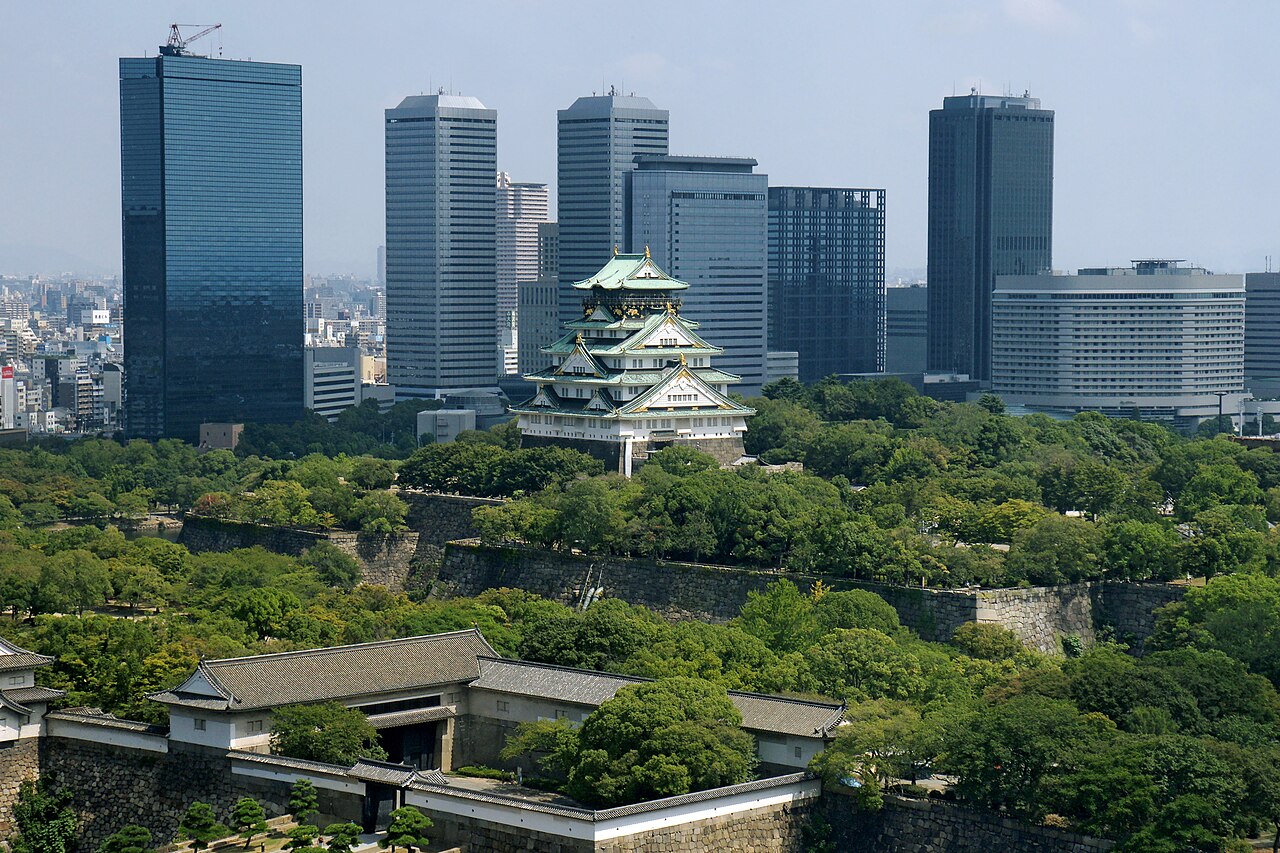
In this guide 8 sections
Go a little further
Best Things to Do in Osaka
Dotonbori and the canal
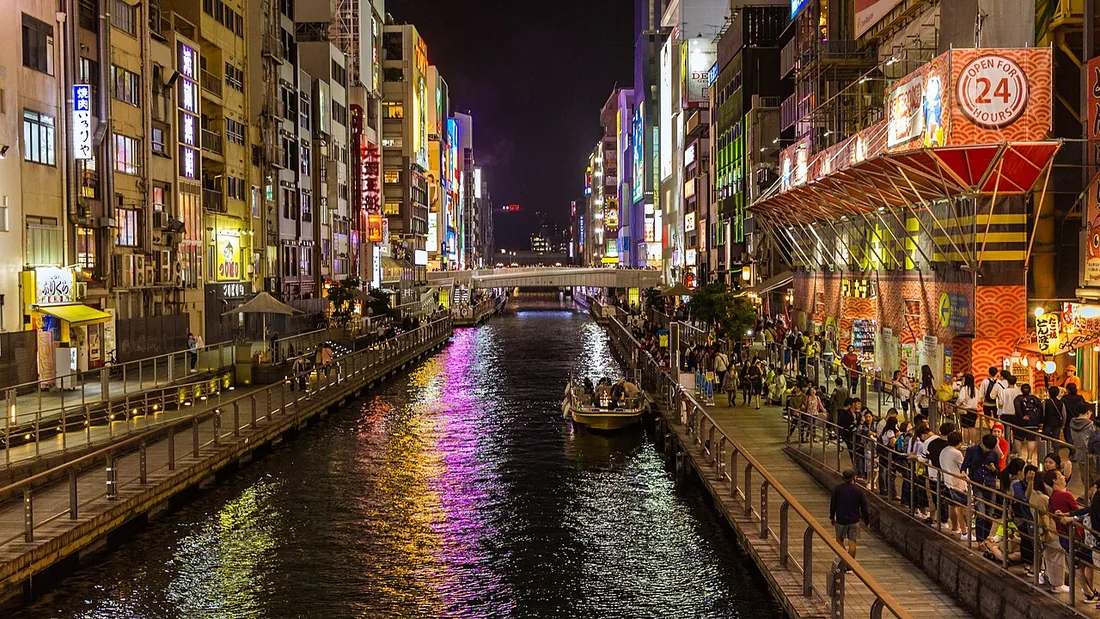
The Glico runner above Ebisubashi Bridge and oversized restaurant signs make this canal district an easy first-evening stop. JNTO describes substantial nighttime crowds, so do not build your evening around getting one unobstructed photograph. Our suggestion: walk the river, choose dinner, then explore a side street. Hozenji Yokocho offers a change from the main strip, with lanterns and traditional restaurants rather than another major sight to tick off.[4][15][17]

Osaka Castle and its park
Visit for the park and the history museum inside the keep, while remembering that today's main tower is a 1931 reconstruction, not an untouched feudal castle. JNTO identifies Morinomiya and Osakajokoen as useful approaches on the Osaka Loop Line. We suggest allowing a half-day if you want both the museum and a relaxed walk; the grounds alone are a reasonable choice when your interest is landscape rather than exhibits.[5][15][17]
Kuromon Market
Kuromon is a working wholesale-and-retail market with roughly 150 shops selling seafood, produce and other goods. Osaka's tourism bureau places it beside Nippombashi Station on the Sennichimae Line. Treat it as a browsing-and-tasting stop, not an obligation to buy every snack you see. We suggest comparing a few stalls before ordering. Individual businesses keep different hours; a single market-wide opening time would be misleading.[9]
Shinsekai
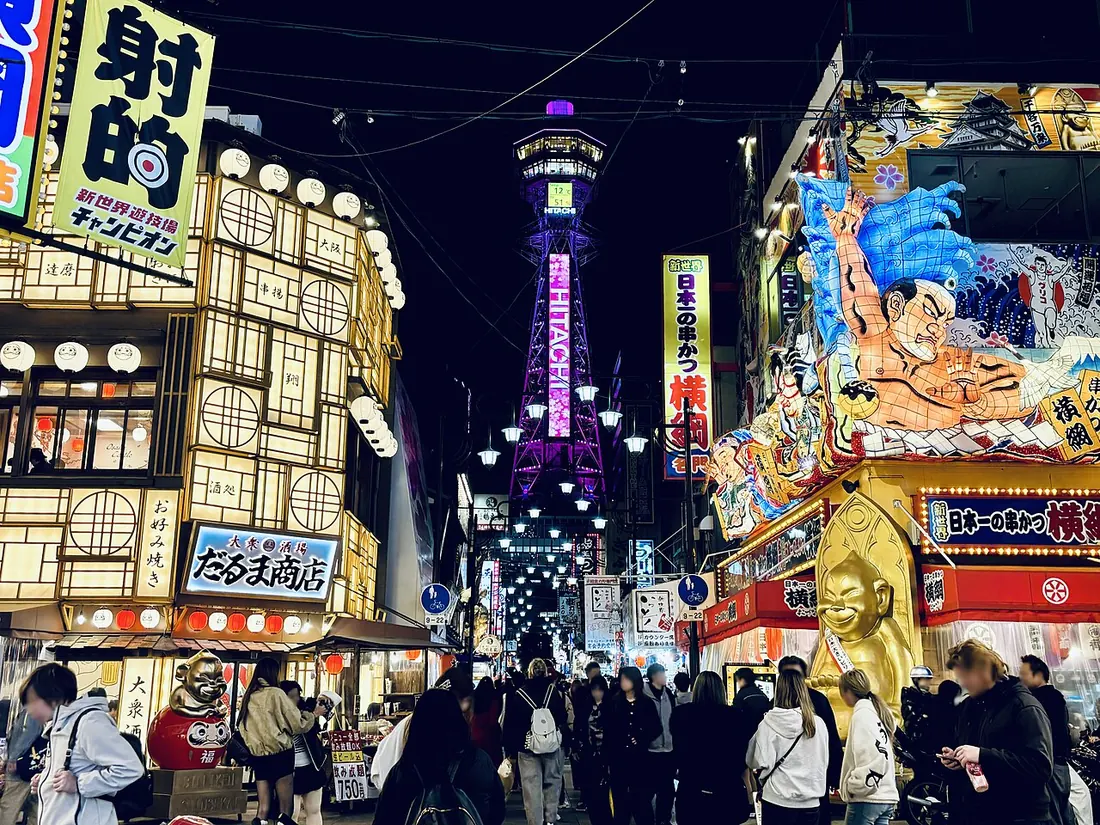
Shinsekai is useful when you want another street-level Osaka experience rather than another museum. Its signs, Billiken figures and retro shops are the attraction. On-location creators also describe enjoying the district in the evening, although that is a preference rather than a guarantee of atmosphere. Our suggestion is to keep this visit loose: browse, stop for a meal and avoid scheduling a second ambitious attraction immediately afterwards.[6][15][17]

Umeda Sky Building
The Floating Garden Observatory offers a high-level view of Osaka, with a circular Sky Walk that is illuminated at night. JNTO recommends it for nighttime city views. Our suggestion is to choose this as your one dedicated skyline stop, rather than buying several observation-deck experiences. Keep the visit flexible around visibility and check the attraction's own current admission information before travelling; this guide does not quote a ticket price or promise access.[6]
Shinsaibashi-suji and Amerikamura
Shinsaibashi's shopping arcade links naturally with Dotonbori, while Amerikamura to its west shifts the emphasis towards vintage clothing, records and youth fashion. This is a useful alternative to filling another afternoon with monuments. Our suggested route is to browse the arcade, detour into Amerikamura and finish by the canal. Set your own shopping limit first: the point is to explore a neighbourhood, not to walk the entire retail district.[4]
A taste of the city
What to Eat and Where
Octopus-filled batter balls
Takoyaki
JNTO describes Osaka's signature batter balls as octopus with ginger and green onions, cooked in rounded moulds. Dotonbori's riverside stalls are one place to try them. Start with a small portion so that a snack does not become your entire food itinerary.[8][4]
Choose a vendor on the day; individual arrangements vary.
Savoury cabbage pancake
Okonomiyaki
Cabbage, flour, egg and dashi form the base, with toppings that can include pork, seafood or cheese. JNTO notes that cooking may happen at your table or be left to you. Ask how your restaurant handles it before reaching for the grill.[8][6]
Check the chosen restaurant directly.
Battered, deep-fried skewers
Kushikatsu
These skewers turn vegetables, meat and seafood into a flexible meal. Order a small selection before adding more. Vegetable ingredients alone do not establish whether a dish meets your dietary requirements; ask the restaurant about preparation rather than assuming from the menu name.[6]
Check the chosen restaurant directly.
Market browsing and tasting
Kuromon seafood and produce
Use the market to compare seafood, fruit and other produce rather than treating it as a fixed-menu attraction. Shops serve both professional buyers and the public. Our suggestion is to decide what you want to taste before committing to several substantial portions.[9]
Individual shop arrangements and opening days vary.
Teppanyaki and okonomiyaki
Oribe
French-bistro influences meet teppanyaki here, including a cabbage steak and an okonomiyaki finish. Choose Oribe when you want a named restaurant for Osaka's griddle cooking rather than another spontaneous street-food stop. Consult the current listing for its distinction; no reservation availability is implied.[13][12]
MICHELIN Guide: Bib Gourmand · 2026 MICHELIN Guide Japan · verified 2026-09-26
Consult the restaurant or Michelin booking link for current availability.
Japanese kappo and omakase
Nishishinsaibashi Yuno
Yuno's omakase approach pairs Japanese cooking with playful sauces, including unexpected accompaniments to sashimi and grilled dishes. It provides a deliberate contrast to snack-based sightseeing. Make it the focus of an evening rather than squeezing it between several other meals.[14][12]
MICHELIN Guide: One Star · 2026 MICHELIN Guide Japan · verified 2026-09-26
Contact the restaurant or check Michelin's booking link before planning dinner.
Set your own pace
Plan your stay
Choose a base and check the station
For a food-led first visit, we suggest the Namba–Shinsaibashi area. The Midosuji Line links it with Umeda. Use Osaka Metro's official route map and route/fare search rather than assuming one ticket or pass covers every railway. Shin-Osaka, the shinkansen arrival station, is not Osaka Station; check the exact station in your hotel directions.[4][8][10][16]
Arriving through Kansai Airport
Kansai International Airport is KIX. JNTO identifies JR and Nankai rail options into Osaka. Match the route to your accommodation before buying a ticket, and check current operator schedules for a late arrival. We omit fixed transfer times and fares because they depend on the service and destination.[8]
Before you travel
Travel Health
Health review overdue or not yet verified. Time-sensitive assertions are withheld. Check the current advice from the authorities below and discuss your itinerary with a qualified travel-health professional.
Find your season
Weather Through the Year
Historical climate normals, not a forecast.[2]
| Month | Avg high | Avg low | Rain | Travel note |
|---|---|---|---|---|
| Jan | 9.7 °C | 3 °C | 47 mm | Bring a warm coat for outdoor walks. |
| Feb | 10.5 °C | 3.2 °C | 60.5 mm | Keep a warm layer for evenings. |
| Mar | 14.2 °C | 6 °C | 103.1 mm | Pack layers and rain protection. |
| Apr | 19.9 °C | 10.9 °C | 101.9 mm | Suggested month for walking; carry a light jacket. |
| May | 24.9 °C | 16 °C | 136.5 mm | Plan longer walks with rain protection. |
| Jun | 28 °C | 20.3 °C | 185.1 mm | Keep an indoor alternative for wetter days. |
| Jul | 31.8 °C | 24.6 °C | 174.4 mm | Shift strenuous walking away from afternoon heat. |
| Aug | 33.7 °C | 25.8 °C | 113 mm | Prioritise shade and cool indoor breaks. |
| Sep | 29.5 °C | 21.9 °C | 152.8 mm | Keep both heat and rain options in your plan. |
| Oct | 23.7 °C | 16 °C | 136 mm | Suggested walking month; rain gear still useful. |
| Nov | 17.8 °C | 10.2 °C | 72.5 mm | Bring layers for cooler evenings. |
| Dec | 12.3 °C | 5.3 °C | 55.5 mm | Use a warm coat for skyline visits. |
Best Time to Visit
Our preferred walking months are April–May and October–November, based on milder temperatures rather than a promise of dry days. JMA's 1991–2020 normals put average daily highs near 20°C in April and 24°C in October. January has the lowest monthly precipitation total; winter is cooler, not rain-free. June is the wettest month in these normals, with July also relatively wet. August is hottest, averaging a 33.7°C daily maximum and 25.8°C minimum. Pack rain protection in every season and leave summer afternoons flexible. These are historical climate averages, not a forecast for your trip.[2]
Make it a journey
Current fares to Osaka
A few useful answers
Frequently asked questions
How many days should I spend in Osaka?
We suggest three days for a first visit, not as an official minimum. That leaves room for the castle, a skyline view, the southern food districts and shopping without making every stop rushed. With two days, choose fewer sights and preserve time for meals rather than adding another distant attraction.[5][6][4]
Which area works well for a first stay?
For the itinerary here, we favour Namba or Shinsaibashi because the shopping arcade and Dotonbori connect naturally on foot. Treat that as an editorial recommendation, not a universal best area. Check your exact station and exit against the hotel address, especially if arriving at Shin-Osaka with luggage.[4][8][15][17]
Is Osaka Castle an original castle?
The current main keep was reconstructed in 1931; construction of the earlier castle began in 1583 under Toyotomi Hideyoshi. Inside is a history museum, while the surrounding park is a separate reason to visit. Choose it for the historical interpretation, architecture and grounds, not the expectation of an unchanged original interior.[5]
Stay curious
Keep exploring
Behind the guide
Sources and editorial checks
Fact check: 2026-09-26. Food check: 2026-09-26. These are editorial checks, not a claim of a first-person visit. Suggested routes and time allocations are planning judgments.
- Türkiye travel-health country advice: Japan · accessed 2026-09-26
- JMA climatological normals, 1991–2020 · accessed 2026-09-26
- WHO travel advice · accessed 2026-09-26
- JNTO: Dotonbori and Shinsaibashi · accessed 2026-09-26
- JNTO: Osaka Castle · accessed 2026-09-26
- JNTO Kansai itinerary: Osaka neighbourhoods and skyline · accessed 2026-09-26
- JNTO: Travel insurance and medical assistance in Japan · accessed 2026-09-26
- JNTO: Osaka food specialties and access · accessed 2026-09-26
- Osaka Convention & Tourism Bureau: Kuromon Market · accessed 2026-09-26
- Osaka Metro official route map and journey-planning tools · accessed 2026-09-26
- WHO: Heat and health · accessed 2026-09-26
- MICHELIN Guide Osaka restaurant directory and price key · accessed 2026-09-26
- MICHELIN Guide Japan 2026: Oribe · accessed 2026-09-26
- MICHELIN Guide Japan 2026: Nishishinsaibashi Yuno · accessed 2026-09-26
- OSAKA, JAPAN (2026) | 10 Awesome Things To Do In & Around Osaka (+ Travel Tips) · accessed 2026-09-26
- OSAKA JAPAN: Detailed Travel Planning Guide · accessed 2026-09-26
- 🇯🇵 Japan in 14 Days | The Ultimate First-Time Itinerary: Osaka, Kyoto, Tokyo & Mt Fuji · accessed 2026-09-26
Available caption material was used only for cross-checked planning context.